 uarkova
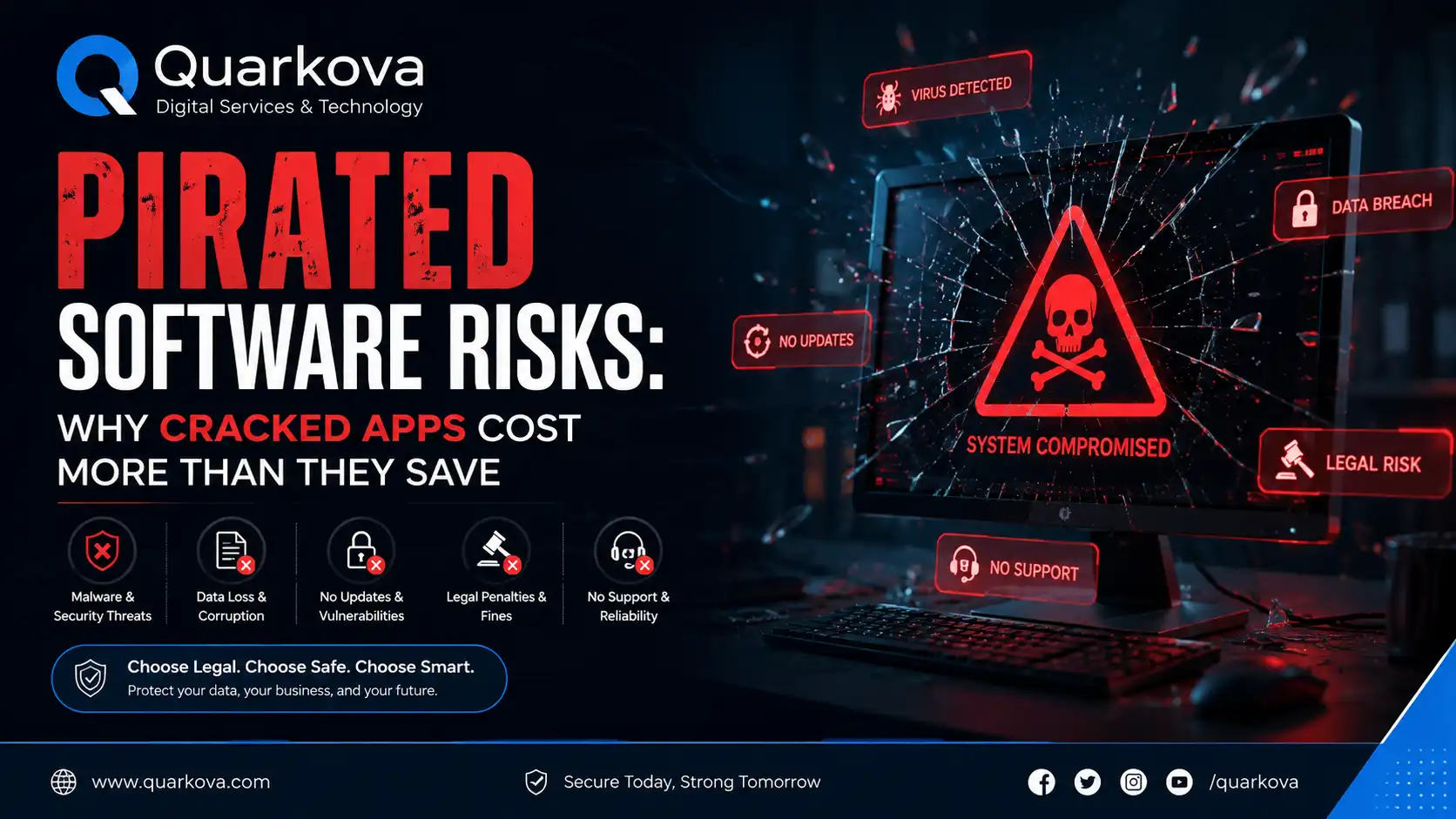
Pirated Software Risks: Why Cracked Apps Cost More Than They Save
What counts as pirated software?
Pirated software is any copy of a paid program that's been altered to skip its licensing check — usually called a "crack," "keygen," or "patch." Instead of coming from the developer, it's repackaged and distributed through unofficial download sites, torrents, or file-sharing forums, with no one verifying what's actually inside the installer.
Why cracked software is riskier than it looks
1. The installer is the malware
Cracking a license check and hiding malicious code use the same skill set: modifying a compiled program without the original developer's knowledge. A "patcher" that disables license verification is just as capable of quietly installing a password stealer, a cryptominer, or a backdoor — and there's no code signing or app-store review catching it before it reaches you.
2. You often have to disable your own defenses
Cracked installers frequently trigger antivirus warnings — because crack tools genuinely behave like the malware they resemble. Many tutorials instruct users to disable antivirus "just for the install." That single step removes your main safety net at the exact moment you need it most.
3. Your accounts, not just your files, are the target
Modern malware bundled in cracked software typically goes after saved browser passwords, active login sessions, and stored payment details — not just files on disk. A single infected installer can lead to compromised email, social accounts, or banking access weeks after you forgot you even installed it.
4. No updates means permanently exposed vulnerabilities
Legitimate software gets regular security patches. Cracked versions usually can't safely update — doing so often breaks the crack or re-triggers license checks. That leaves you running software with known, publicly documented vulnerabilities indefinitely, or repeating the whole risky download process for every new version.
5. Instability that costs you real work
Cracked builds are modified files nobody tested to the original developer's standard. Crashes, corrupted files, missing features, and conflicts with other software are common — a serious problem if you're relying on the tool for client work or coursework with a deadline.
6. Legal exposure that varies but doesn't disappear
Software is protected by copyright, and using unauthorized copies can carry legal consequences depending on your country and the specific license terms. It's rarely enforced against individual home users, but "rarely" isn't "never," and it's a risk with zero upside.
Free software isn't the same thing as pirated software
It's worth separating these clearly, because they get lumped together unfairly. Free software — open-source projects, free tiers, free trials — is built and distributed legally by its creators. Pirated software is someone else's paid product with the payment mechanism forcibly removed. One is a legitimate choice; the other is a security gamble wearing the same word.
6 legitimate alternatives worth using instead
If the premium price tag is the blocker, these are real, actively maintained tools — not stripped-down demos:
- GIMP — photo editing and graphic design, a genuine Photoshop alternative for most everyday work.
- Blender — 3D modeling, animation, and rendering, used in actual studio production pipelines, not just as a hobbyist tool.
- Krita — digital painting and illustration, built specifically for artists rather than adapted from a general editor.
- Audacity — audio recording and editing, a long-standing standard for podcasters and musicians on a budget.
- LibreOffice — documents, spreadsheets, and presentations, fully compatible with most Microsoft Office file formats.
- DaVinci Resolve — video editing, color grading, and audio post, with a free edition powerful enough for professional output.
How to download software without the risk
- Get software directly from the developer's official site whenever possible.
- Verify the publisher name before installing anything unfamiliar.
- Never disable antivirus or security warnings to force an install through.
- Keep your OS and security software up to date.
- Use official free tiers or trial versions when the paid edition isn't in budget.
- Read the license — many "free for personal use" tools cover more than people assume.
- Keep backups of important files, independent of any single application.
A large download library doesn't mean a safe one
Sites offering hundreds of "free" premium programs aren't running a charity — someone is paying for the bandwidth and hosting, and it's usually funded by ads, bundled installers, or worse. The size of a site's catalog says nothing about what's actually inside each file. When in doubt, the developer's own website or a well-known open-source repository is the only real guarantee.
The bottom line
Pirated software trades a one-time payment for an open-ended risk — to your data, your accounts, and your device. In most cases, a free and legitimate alternative already does the job. The software you "saved money" on is rarely worth what it can end up costing.
Quick takeaway
Genuine software and open-source alternatives protect your data and your work. Pirated software protects nothing — including the money you thought you were saving.
FAQ
Is pirated software actually dangerous, or is that overstated?
It's not overstated. Cracking a license check and hiding malicious code use the same technique, and there's no publisher checking what actually ships inside the file.
Can antivirus software protect me if I use cracked programs?
It helps, but crack tools are built to bypass security checks — often the same mechanism used to hide malware — and many install guides tell users to disable antivirus entirely first.
Are free and open-source programs as good as paid software?
For most tasks, yes. Tools like GIMP, Blender, and DaVinci Resolve are used in real professional workflows, not just as budget substitutes.
What should I do if I've already installed pirated software?
Run a full scan with reputable security software, change important passwords from a separate trusted device, and replace the program with a legitimate alternative.