 uarkova
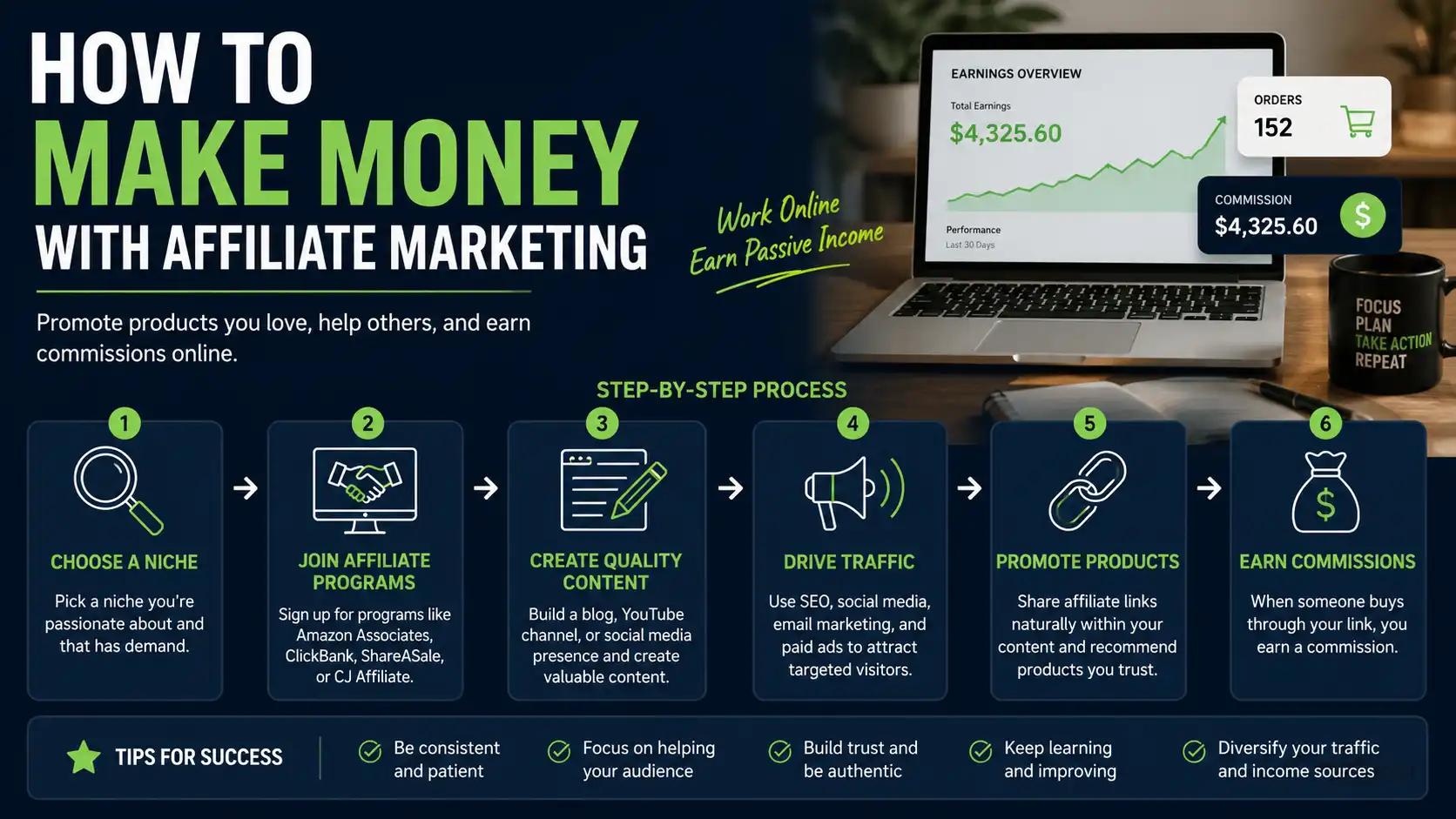
How to Make Money with Affiliate Marketing
How to Make Money with Affiliate Marketing (Without Losing Your Mind)
If you've spent any time online, you've probably seen the promise: "Make $10,000 a month with affiliate marketing while you sleep!" Most of that is noise. But underneath the hype, there's a real business model that genuinely works — it just takes longer and requires more effort than the ads make it look.
Here's an honest, practical breakdown of how affiliate marketing actually works and how to get started without wasting months on the wrong things.
So What Is Affiliate Marketing, Really?
In plain terms: you recommend a product, someone buys it through your link, and the company pays you a cut. That's it. No inventory, no shipping, no customer service headaches.
The catch is that "recommend a product" is doing a lot of heavy lifting in that sentence. You need people to trust your recommendation enough to click and buy — and that trust doesn't happen overnight.
How the Money Actually Flows
When you join an affiliate program, you get a special link with a tracking code baked into it. Someone clicks that link, a cookie gets dropped in their browser, and if they buy something within a certain window (could be 24 hours, could be 90 days depending on the program), you get credited for the sale.
Most beginners get tripped up here: you don't need someone to buy immediately. You just need them to click your link before they buy. This is why content that builds trust over time — blog posts, YouTube reviews — tends to outperform random social media links.
Picking a Niche Without Overthinking It
A lot of guides make niche selection sound like some grand strategic decision. In reality, you want two things: something you can talk about without getting bored, and something people actually spend money on.
Niches that consistently work well include personal finance and budgeting, fitness and weight loss, tech gadgets and software, skincare and beauty, and travel planning. The reason these work isn't magic — it's that people in these spaces are actively looking to buy things and searching for advice before they do.
If you already have a hobby or area of expertise, start there. Knowledge you already have is a massive head start.
Where to Actually Put Your Content
You don't need to be everywhere. Pick one platform and get good at it first.
A blog is still one of the best long-term plays. Once an article ranks on Google, it can bring in traffic — and sales — for years with minimal upkeep. The downside is it takes months to start seeing real traffic.
YouTube works great if you're comfortable on camera or doing voiceovers. Product reviews and "how I use this" videos perform especially well because people want to see the thing in action before buying.
Instagram, TikTok, and Pinterest are good for visual products and faster feedback, but the content has a shorter shelf life — you're constantly creating to stay visible.
If you're not sure, a blog combined with Pinterest (for traffic) is a solid low-cost starting combo.
Finding Programs Worth Joining
Amazon Associates is the easiest to start with because almost everything sells on Amazon, but the commission rates are low (often 1–4%). Once you have some traffic, look into programs with better payouts — software companies (like web hosting, email tools, or SEO tools) often pay 20–50% commissions, sometimes recurring monthly.
Networks like ShareASale, CJ Affiliate, and Awin give you access to hundreds of brands in one dashboard, which makes it easier to find relevant programs once you know your niche.
A quick tip: check the cookie duration before joining. A 24-hour cookie versus a 60-day cookie can make a huge difference in how many sales actually get credited to you.
What Content Actually Converts
Not all content is equal when it comes to making sales. The formats that consistently bring in affiliate income are:
Product comparisons ("Brand A vs Brand B") work because the reader is already deciding between two options — they just need a nudge.
Honest reviews work because people search "[product name] review" right before buying.
"Best of" roundup posts ("Best Budget Laptops Under $500") work because they capture people in shopping mode.
Tutorials and how-tos work indirectly — you help someone solve a problem, and the tools or products you used along the way become natural recommendations.
The common thread is that all of these target people who are close to making a purchase decision, not just casually browsing.
Getting Traffic Without Burning Out
SEO is the long game — writing content optimized for search engines so Google sends you free traffic. It's slow at first (expect 4-6 months before meaningful traffic), but it compounds.
Paid ads can speed things up, but you need to know your numbers. If you're spending more on ads than you're earning back in commissions, you're losing money — simple as that.
Email marketing is underrated. Building a list — even a small one — gives you a direct line to people who already trust you. Open rates and conversion rates on email tend to beat social media by a wide margin.
Realistically, most successful affiliates use SEO as their foundation and layer email and social on top once they have some traction.
The Honest Truth About Timelines
Almost nobody makes meaningful money in the first 3 months. Most people quit around month 2 or 3 because nothing seems to be working. The people who succeed are usually the ones who kept publishing content through that quiet period.
A more realistic timeline looks like: months 1-3 are about building content and learning, months 4-6 might bring your first sales, and months 6-12 is where consistent income starts to show up — if you've stayed consistent.
A Few Things That Trip People Up
Promoting too many products dilutes your credibility — pick a handful you genuinely believe in. Ignoring SEO basics (like actually researching what people search for) means writing content nobody finds. And not disclosing affiliate links isn't just bad practice, it's legally required in most countries — a simple "this post contains affiliate links" disclosure is enough.
Bottom Line
Affiliate marketing isn't passive income, especially at the start. It's more like planting a garden — most of the work happens before you see any results. But if you pick a niche you can stick with, focus on genuinely helpful content, and give it real time, it can become one of the more sustainable ways to earn online.
Start with one platform, one niche, and one or two affiliate programs. Get that working before you try to scale.